
Our educational video, infographics, fact sheets and social media graphics that can be shared by you to not only spread the news about the EPP Jubilee, but to help others better understand NOAA, NOAA EPP and the program’s 25-year impact.
About EPP
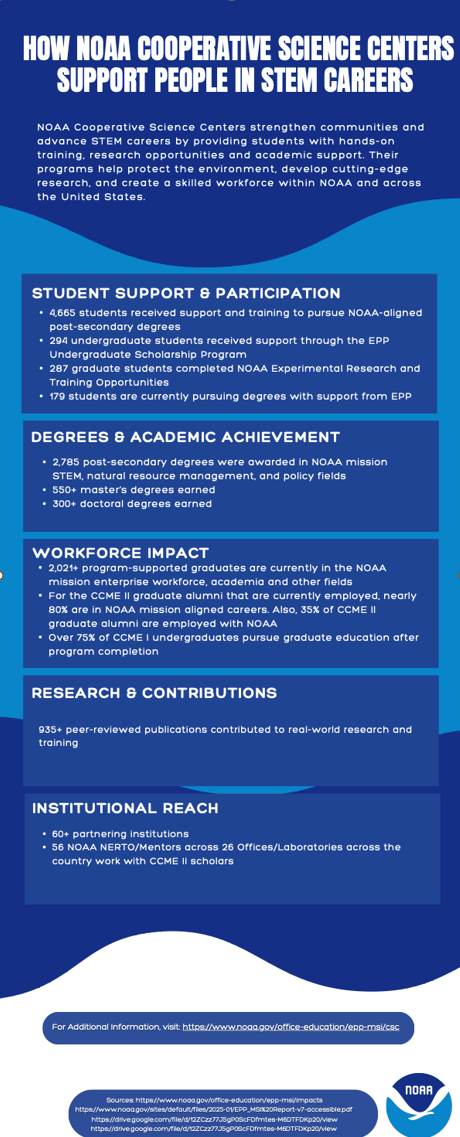
How NOAA Cooperative Science Centers Support People in STEM Careers
For the last 25 years, Cooperative Science Centers (CSCs) have supported research and workforce development, equipping students with the knowledge to pursue careers in the sciences related to NOAA’s mission.
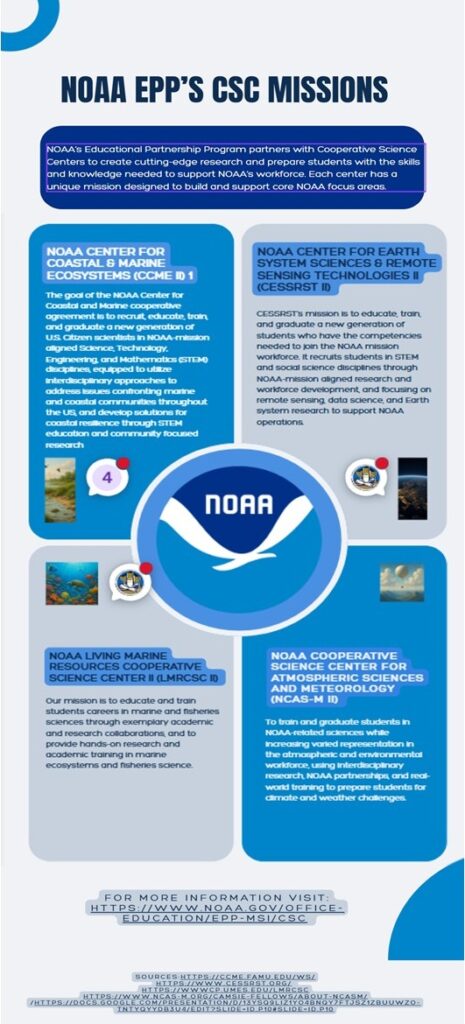
NOAA EPP CSC Missions
NOAA’s Educational Partnership Program partners with Cooperative Science to create cutting-edge research and prepare students with the skills and knowledge needed to support NOAA’s workforce.
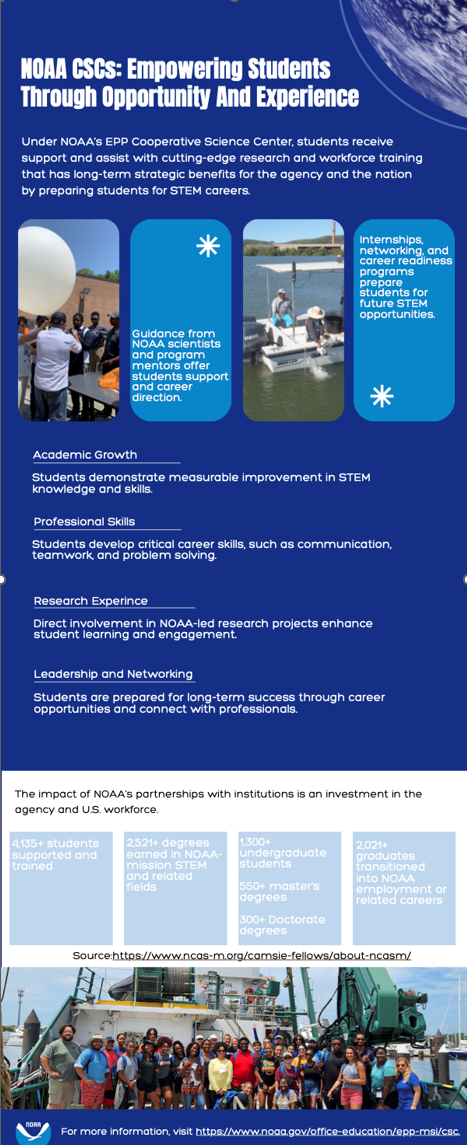
NOAA CSCs: Empowering Students Through Opportunity and Experience
Under NOAA’s EPP Cooperative Science Center, students receive support and assist with cutting-edge research and workforce training that has long-term strategic benefits for the agency and the nation by preparing students for STEM careers
Cooperative Science Centers
Each Cooperative Science Centers plays an important role in ensuring NOAA EPP meets its two main objectives, which are to enhance the pipeline of talented high-quality students in STEM for the future U.S. workforce, provide opportunities for scholars to become familiar with NOAA’s research and locations across the United States and continue their education in NOAA mission-related fields of study. Explore the impact fact sheets below to learn more about the accomplishments and milestones of each center over the last few years.
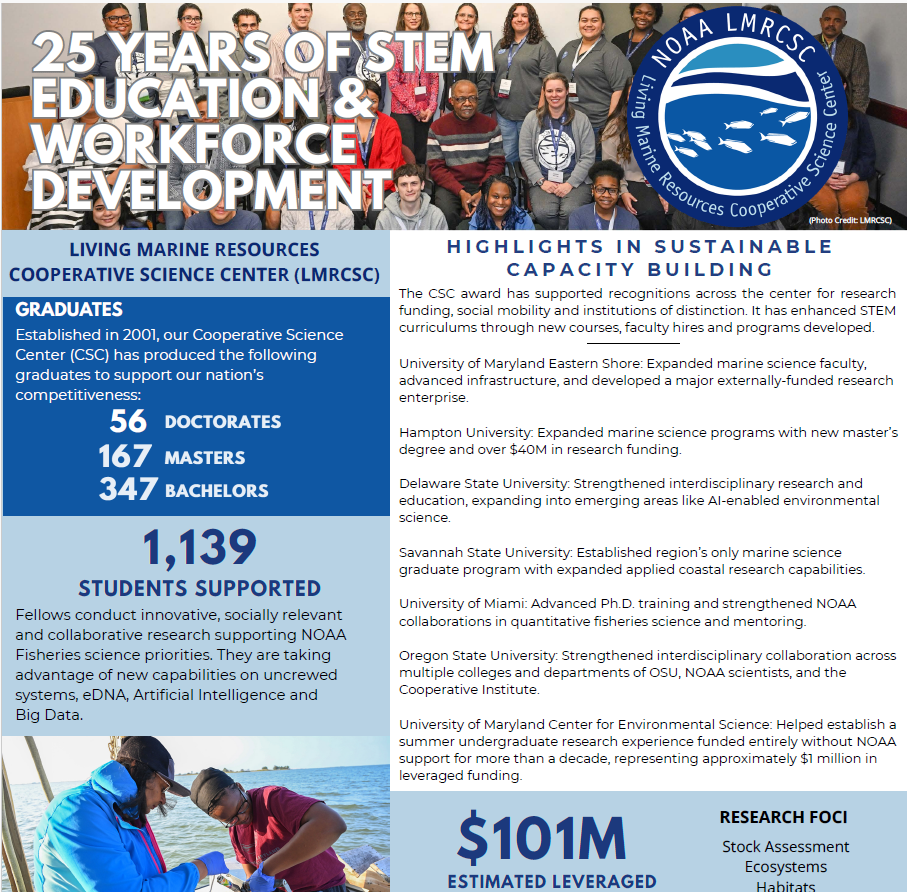
LMRCSC II: The NOAA Living Marine Resources Cooperative Science Center, led by the University of Maryland Eastern Shore. It focuses on marine fisheries, aquaculture, and protected species
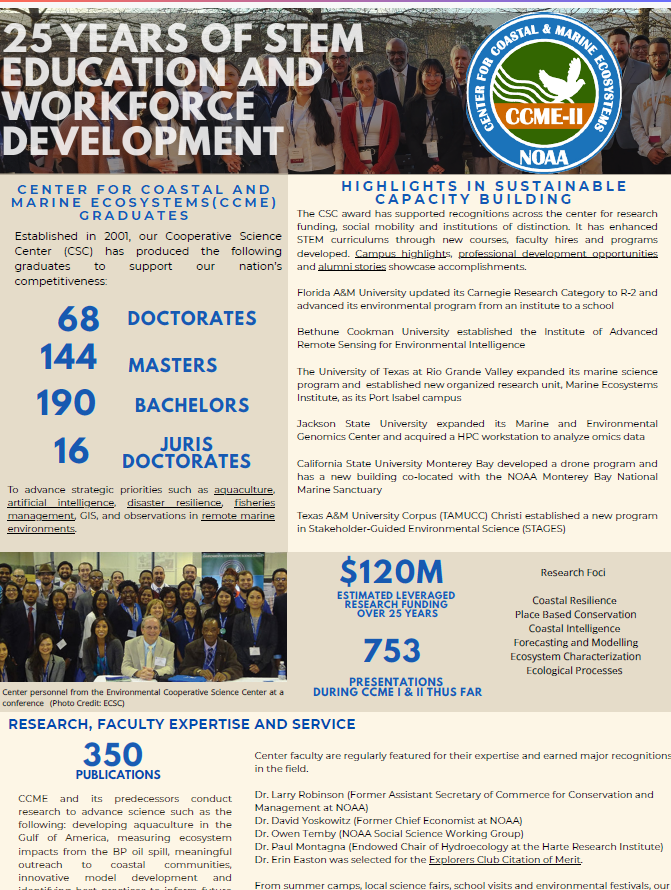
CCME II: The NOAA Center for Coastal and Marine Ecosystems, led by Florida A&M University (Tallahassee, FL). It focuses on coastal resilience, marine ecosystems, and coastal intelligence.
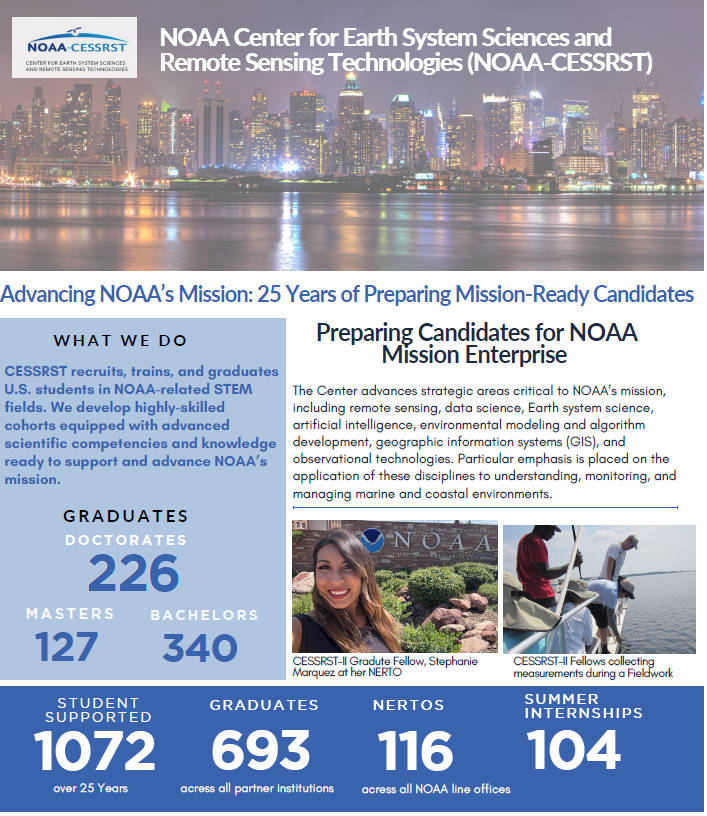
CESSRST II: The NOAA Center for Earth System Sciences and Remote Sensing Technologies, led by the City College of New York. It focuses on satellite remote sensing and earth system sciences.
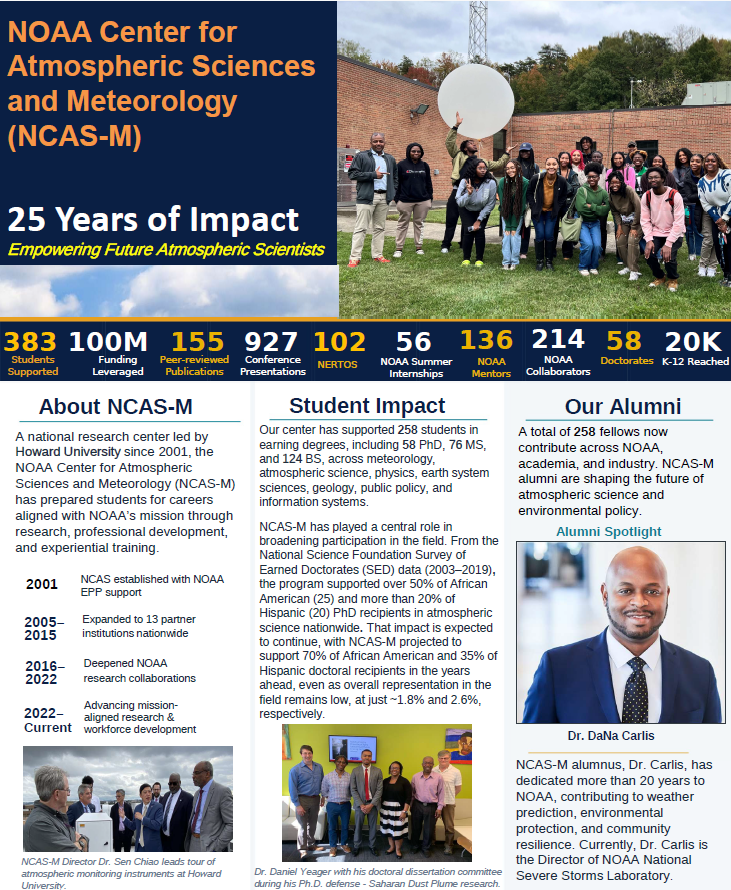
NCAS-M II: The NOAA Center for Atmospheric Sciences and Meteorology, led by Howard University (Washington, D.C.). It focuses on atmospheric sciences, meteorology, air quality and social sciences.