
For 25 years, NOAA’s Educational Partnership Program (EPP) has expanded opportunities for students pursuing degrees in science, technology, engineering, and mathematics (STEM). In fact, more than 4,600 students pursuing NOAA mission-aligned undergraduate degrees and over 2,700 post-secondary degrees have been supported. While scholarships are an important part of this support, NOAA EPP provides much more than financial assistance.
Through research experiences, mentorship, internships, professional development opportunities, and workforce training, the program helps students build pathways to long-term success in STEM careers and a direct pipeline into career and employment opportunities into NOAA offices, federal agencies, universities, research institutions, nonprofit organizations, and private companies.
Since its establishment in 2001, NOAA EPP has partnered with Historically Black Colleges and Universities (HBCUs), Minority Serving Institutions (MSIs) and other academic institutions to help prepare students for careers in atmospheric science, earth systems science, remote sensing technology, marine ecosystems, living marine resources, and related fields. Through these Cooperative Science Centers (CSC), students gain access to resources and experiences that help bridge the gap between classroom learning and professional achievement.
One of the most valuable aspects of the program is the opportunity for students to participate in hands-on research. Through CSCs, students work alongside faculty researchers and NOAA professionals to address scientific questions and challenges that impact communities across the nation. These experiences allow students to apply their academic knowledge in real-world settings, while developing technical skills that are essential for future careers.
“Sometimes you may not realize what you’re fully capable of, but they definitely see the potential in you,” said Dr. Equisha Glenn who joined the program in 2010 through NOAA-CREST, now known as CESSRST.
Students participating in awards through NOAA EPP may engage in field research, laboratory studies, data analysis, scientific presentations, and collaborative research projects. These opportunities help students strengthen their understanding of scientific methods while contributing to research efforts that support NOAA’s mission in understanding and predicting changes in climate, weather, oceans, and coasts.
“This experience solidified that this is what I wanted to do as a career,” said Dr. Trika Gerard who joined the program in 2002 and is currently the Deputy Director for Science and Operations, Southeast Fisheries Science Center.
In addition to research opportunities, NOAA EPP emphasizes mentorship as a critical component of student success. Faculty members, NOAA scientists, program managers, and professional mentors work closely with students throughout their academic journeys. These relationships provide guidance, encouragement, and professional insight that can help students navigate academic challenges and identify career opportunities.
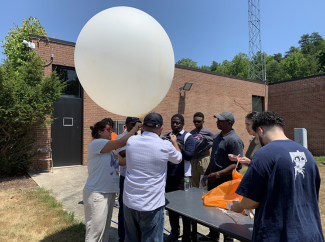
Mentorship often extends beyond the classroom and laboratory. Students receive advice on graduate school applications, career planning, networking strategies, professional development and gain access to faculty who serve as educational advisors and committee members. “As one of the only CSCs with a longtime integrated social science focus, I have supported NCAS and NCAS-M students with research projects as well as, on their dissertation and thesis committees, said Dr. Tia C. M. Tyree, longtime faculty member at the center. “It’s this interdisciplinary aspect of EPP that creates insights and research findings that are applicable to having a
NOAA EPP also provides opportunities for experiential learning through internships, fellowships, workshops, conferences, and NOAA Experiential Research and Training Opportunities (NERTO). These learning options allow students to work directly with NOAA professionals and gain firsthand experience in environments where scientific research and decision-making take place.
Participation in conferences and professional events allows students to share their research, develop communication skills, and build networks with peers and professionals from across the country. These experiences help students gain confidence in presenting their work and contribute to their development as future scientists, researchers, and leaders. In fact, NOAA EPP hosts the biennial NOAA Education and Science Forum, where undergraduate and graduate STEM students present their research through oral presentations and poster sessions.
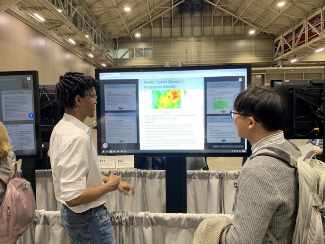
Professional development is another key component of the NOAA EPP experience. Students are coached to develop skills that extend beyond technical expertise, including leadership, teamwork, communication, critical thinking, and problem-solving. These competencies prepare students not only for academic success but also for the demands of professional STEM careers.
As NOAA continues to address complex environmental and scientific challenges, the need for a skilled and highly competent STEM workforce remains essential. NOAA EPP helps meet this need by providing students with the tools, experiences, and support systems necessary to succeed in their chosen fields. Their skills and employment readiness demonstrate the lasting impact that access to opportunity, mentorship, and professional experiences can have on individual careers and the broader STEM workforce. As the program looks toward the future, the EPP commitment to supporting the next generation of scientists, researchers, and leaders remains stronger than ever.